
- June 24, 2026
- Posted by: Muhammad Shehzad
- Category: Blogs
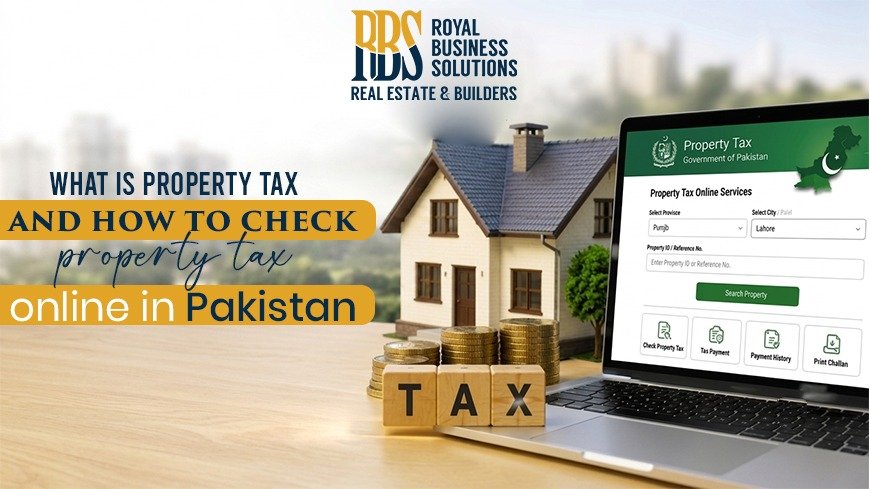
Owning a home or property in Pakistan is a dream for millions of families. However, there is one thing you cannot ignore, and that is property tax. If you make a mistake in paying the tax or do not pay it on time, you can face heavy fines, legal action, and even serious difficulties in transferring the property to your name.
Fortunately, now the provincial governments of Pakistan have made this task very easy. Consequently, you do not need to stand in long lines or go through agents. You can complete a property tax record check and deposit your dues online from the comfort of your home.
In this guide, we will explain in very simple terms what property tax in Pakistan is, what its types are, and how to perform an online property tax check from home.
What is Property Tax in Pakistan?
Property tax in Pakistan is a provincial levy imposed on property owners (such as houses, flats, commercial buildings, shops, offices, and vacant plots) in cities. This tax is not collected by the federal government but by each province’s own Excise and Taxation Department.
The main purpose of this tax is to provide basic amenities in cities, such as road maintenance, sanitation, street lights, and local development works. There are some important things that every property owner should know:
- Property tax is payable every year.
- The amount of tax depends on the type of property, its size, the area it is located in, and its use (i.e., residential or commercial).
- This tax is completely separate from federal government taxes (such as capital gains tax or advance tax levied under the Income Tax Ordinance).
- In addition, if this tax is not paid on time, there may be a penalty, and there may also be legal difficulties in buying, selling, or transferring the property to someone else in the future.
Types of Property Taxes in Pakistan
The property tax system in Pakistan is divided into different parts. Specifically, here are the main taxes that apply to buying, selling, or owning property:
Urban Immovable Property Tax (UIPT)
This is the basic property tax in Pakistan that is paid to the provincial government every year. Generally, it is calculated based on the property’s Annual Rental Value (ARV), an estimate of how much rent it would generate annually if rented out. The rate varies from province to province:
- Punjab: 5% of the annual rental value
- Sindh: 25% of the annual rental value (however, the official rental value of the property here is usually kept lower)
- Khyber Pakhtunkhwa (KPK): 10% of the annual rental value
Capital Value Tax (CVT)
This tax is paid only once by the buyer when the property is registered in his name. According to federal law, the current rate is 2% of the official rental value of the property. Furthermore, this tax applies to both residential and commercial properties.
Capital Gains Tax (CGT)
CGT is levied when you sell your property at a profit.
- Properties purchased on or after July 1, 2024: If you are a tax filer, you will have to pay a flat 15% tax on the profit.
- Properties purchased before July 2024: The tax on these is calculated based on how long you have owned the property. This tax decreases as time passes, and after 6 years it is eliminated (0%).
Advance Tax, Section 236C and 236K
These are taxes that are deducted on the spot when a property is transferred from one name to another:
- Section 236C (for the seller): This is paid by the seller of the property. It ranges from 4.5% to 11.5%, depending on whether the property is a filer or a non-filer and the value of the property.
- Section 236K (for the buyer): This is paid by the property buyer. It starts at 1.5% for filers (for properties worth less than Rs 5 crore) and goes up to 18.5% for non-filers (for properties worth more than Rs 10 crore).
- Both these taxes are adjustable, meaning that when you file your income tax return at the end of the year, you can include this amount in your total tax and claim it back or deduct it.
Federal Excise Duty (FED)
A 5% duty is levied on the first sale or booking of commercial properties and brand new residential projects (plots or houses). It is paid at the time of allotment or transfer and is non-refundable (i.e., the money is not refundable).
Stamp Duty
This provincial tax is mandatory for the official recognition of the legal documents and registry of the property. The current rates in different regions are as follows:
- Punjab: 1% of the official value of the property.
- Islamabad: 1% ( reduced from 4% to 1% under the Finance Act).
- Sindh: 2% of the official value of the property.
- Khyber Pakhtunkhwa (KPK): 3% of the official value of the property.
How to Check Property Tax Online in Pakistan?
You can easily perform your property tax verification Pakistan, due to digitisation efforts across the country. Here is how to do it in each province:
Punjab
Punjab’s Excise, Taxation and Narcotics Control Department has made the property tax checking system modern and easy.
Procedure
- First of all, visit the Excise Punjab website.
- Select Excise & Taxation from the Services menu.
- Then click on Property Tax.
- Enter your Property ID or your National Identity Card (CNIC) number.
- Your property tax due amount, old record and challan will immediately appear on the screen.
- You can also download or print this challan for your records.
In case of any difficulty or information, you can call the Punjab Excise helpline. Another good thing is that the Punjab government has computerised over 55 million old land records through the Land Records Management Information System (LRMIS), making property verification and tax calculations more reliable than ever.
Sindh
The Sindh Board of Revenue and Excise & Taxation Department manage property tax online through their respective portals.
Procedure
- First of all, visit the website SindhZameen. You can also download the Sindh e-Pay app on your mobile.
- Select the area where your property is located (e.g., DHA, Gulshan-e-Iqbal, Malir Cantt, etc.).
- Select the property type (e.g. Residential or Commercial).
- Enter the details of your property (property number, etc.).
- If you are a registered tax filer with FBR, tick the box there.
- Finally, click on Evaluate Property. Your estimated tax will appear on the screen.
The Sindh Board of Revenue has digitised more than 4,000 rural maps (Deh Maps) to make property records across the province more accurate and secure.
Khyber Pakhtunkhwa (KPK)
A complete online property tax system in Khyber Pakhtunkhwa is still under development, but the Excise and Taxation Department has created a dedicated page to calculate the tax.
Procedure
- First, visit the official website.
- You can estimate how much tax you owe by entering your property details there.
Since the digitisation of all property tax records in Khyber Pakhtunkhwa is still underway, you may have to visit your nearest Excise and Taxation office to view and pay your complete tax record for now.
Islamabad
The Capital Development Authority portal is used to check property tax in the federal capital, Islamabad.
Procedure
- First, visit the official portal of the Capital Development Authority (CDA) or the official websites.
- Go to the Citizen Portal there and select the property tax section.
- Enter your property number or your CNIC number to find out the amount of tax due.
How to Pay Property Tax in Pakistan online
After checking your property tax, it is very easy and secure to pay it online. The methods of paying tax in different provinces are as follows:
Punjab
- You can visit the official website or download the ePay Punjab app on your mobile.
- You can deposit the amount through JazzCash, Easypaisa, Internet Banking, or by visiting the banks (like HBL, MCB, ABL).
- ePay Punjab digital receipts are officially accepted when transferring the property to someone else.
Sindh
- Similarly, in Sindh, you can pay the tax through the Sindh Excise Tax Portal using Sindh Bank, 1Link service, or various mobile wallets.
Khyber Pakhtunkhwa (KPK)
- Where an online facility is available, you can pay through Jazz Cash, banking apps or ATMs. Due to the lack of a fully digital system in some areas, you will have to visit the nearest excise office and deposit the amount.
- After depositing the tax, always keep the digital receipt or confirmation message with you. This receipt is very important for buying and selling property, registering your name and avoiding any future legal disputes.
Overseas Pakistanis do not need to come to Pakistan to pay taxes; they can easily deposit their property tax in Pakistan from there through Pakistani banking apps or mobile wallets.
Property Tax Calculator Pakistan
Before finalising any property transaction (buying or selling), it is a wise decision to estimate your total tax. The best online tools for this task are as follows:
TaxToday Property Tax Calculator
TaxToday Property Tax Calculator is a comprehensive and absolutely free calculator that works for all five provinces of Pakistan. It includes Buyer’s Tax (Section 236K), Seller’s Tax (Section 236C), Capital Gains Tax (CGT), Stamp Duty, PLRA Fee and Annual Property Tax (UIPT). All its rates are up-to-date as per the Finance Act, and it calculates the tax separately for filers, late filers (those who do not file returns on time) and non-filers.
Punjab Excise and Taxation Website
This website has its own property tax calculator. Here you have to select the property section (such as ground floor, basement, etc.), building type (house, shop or office) and floor, after which it will give you the annual tax estimate.
Sindh Zameen Portal
This portal provides a calculator to calculate the official property valuation and property tax for Karachi and other areas of Sindh.
These online calculators only provide an estimate. Always confirm the final and accurate tax amount with the FBR and your provincial sub-registrar before finalising the property deal.
Who is Exempt from Property Tax in Pakistan?
Not all property taxes apply to everyone. The government has exempted certain situations and people from these taxes, which are detailed below:
- Properties whose annual rental value is less than a limit set by the provincial government are generally not subject to tax. This limit varies from province to province.
- Under the Constitution of Pakistan, agricultural land is exempt from federal income tax; however, provincial governments are subject to their own agricultural income tax laws.
- In many provinces, including Punjab, special concessions or complete exemptions are given in property tax for properties held in the names of widows and senior citizens.
- Under the Finance Act, if a person sells only one property in their life, they can get an exemption from advance tax. But there are strict conditions that the property must have been in the personal use of the seller for at least 15 years and must have been disclosed in his FBR wealth statement for the same period.
Frequently Asked Questions (FAQs)
Q1: How do I check if I have any tax due?
Ans. Visit Epay Punjab or your provincial Excise & Taxation portal, enter your Property ID or CNIC, and your dues will appear instantly.
Q2: How to check property tax in Pakistan online by CNIC?
Ans. Go to Excise Punjab, select Property Tax, enter your CNIC number, and your property tax record and dues will be displayed.
Q3: How do I check my local property tax?
Ans. Visit your province’s official Excise & Taxation website, enter your property details, and check your local tax dues online.
Conclusion
Understanding the property tax in Pakistan is no longer an extra piece of information but a basic necessity for every property owner, buyer and investor. The good news is that now the entire system is becoming clearer and easier than ever. Provincial governments have paid special attention to computerising land records and tax portals, through which you can now check, verify and pay your property tax in Pakistan from home in minutes.
If you want to invest in a place that is completely safe and where all tax laws are followed, you can choose the best housing projects like Nova City Islamabad and Capital Smart City.