
- October 23, 2026
- Posted by: Muhammad Shehzad
- Category: Blogs
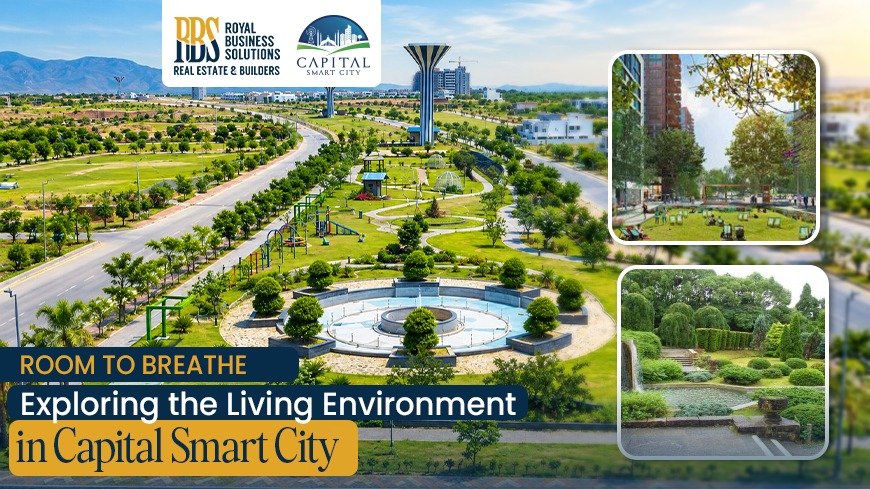
Ask a family what they want from a new home and the answer often reaches well beyond the rooms. Somewhere to walk. A pleasant street. Space for children to spend time outside. A neighbourhood that feels cared for.
The Capital Smart City environment is part of that conversation. Its planting, resource-management and environmental initiatives deserve to be understood through both the development’s published record and the everyday experience of the place.
The environmental record
The dates matter: these figures describe that published account and should not be read as newly measured results for 2026.
| Initiative | Capital Smart City Data Bank |
| Planting | More than five million trees planted. |
| Solar energy | More than 5 MW reported in use. |
| Further solar expansion | A further 20 MW described as planned for a next phase. |
| Water reuse | More than 500,000 gallons per day described as treated for reuse. |
What these measures mean for a resident
The value of environmental planning becomes more visible through continuing operation. Trees need care as they establish. Shared spaces need maintenance. A water-reuse system needs to function consistently. Energy systems need a clear operating and maintenance arrangement.
For someone choosing a home, these connections are practical. A maintained walking route is easier to assess during a visit than a future landscape image. The condition of streets and open areas gives a sense of how the community is being managed.
A planned community also develops in stages. Ongoing construction can affect the immediate surroundings of one property differently from another. Look at the location you are considering rather than relying solely on an overall project description.
Air quality deserves clear context
The original feature also discusses air-quality monitoring and presents readings. A useful air-quality comparison needs its monitoring location, date, time, AQI scale and measurement method. Weather and conditions can change, so a single reading cannot represent an entire year.
For that reason, this article does not convert a historic reading into a permanent claim about the air a resident will breathe. The useful information is a transparent record that readers can understand alongside their own observations.
A housing decision can give proper weight to environmental comfort without promising a particular health outcome.
Spend time in the neighbourhood
During a visit, walk as well as drive. Look at the spaces people can actually use, the management of construction activity and the condition of the area around the property. Consider whether the routes and shared spaces suit the way your household spends its day.
If you are overseas, request dated photographs or a continuous video of the immediate surroundings. Ask which environmental initiatives are operational in that location and which belong to a future phase. This gives the property’s setting a place in the decision alongside its design and price.
Bring your living priorities to RBS
Tell RBS what you value about the environment around your home. It may be access to open space, a quieter position or a neighbourhood suited to family routines.
We can use those preferences to focus the property discussion and coordinate the location-specific questions you want answered. Contact RBS to arrange a viewing that gives you time to explore the surroundings as well as the property.
The address on the documents matters. So does the place you will step into each morning.